Reflections on Pongal Festivities and a HinDruid Pongal Ceremony
by Srini & Loam
At the entrance to the kitchen, a young boy hovers in the threshold, watching two women bring out a charcoal stove that was reserved only for special occasions. It was early in the day, before the vegetable vendors began calling through the streets, after the parakeets began their daybreak squawk from the Moringa trees. That boy was me (Srini) and those women were my mother and aunt, beginning preparations for Pongal early in the day.
To understand this four-day South Indian harvest festival, it is useful to understand the Tamil Calendar. Like the Gregorian calendar, there are twelve months in the Tamil calendar, with each month containing twenty-nine to thirty-two days. The ninth month of the year is named Margazhi, and it falls roughly between December 15-January 14 in the Gregorian calendar. The tenth month–Thai– begins on January 15 of the Gregorian calendar. Both Margazhi and Thai belong to the season of Mun-pani, which can be translated as early mist.
During the month of Margazhi, nothing of importance is taken up. Culturally, it is considered inauspicious to take on major endeavors. We honor this month as a time of spiritual rest, stability, and introspection. In the same way that Druidry honors nature’s underground retreat during the turn of the wheel between Samhain and Winter Solstice, Margazhi asks us to tune into the planet’s energy pulling inward and downward, into the earth.
The first day of Pongal is called Bhogi and it is celebrated on the last day of Margazhi. It marks the transition between the period of rest and a period of quickening. Pongal honors this transition, this threshold between resting underground in the darkness of earth, the darkness of winter and the rebirth and strengthening of the sun. In the OBOD tradition, we call the winter solstice Alban Arthan, the Light of Arthur. Though the days become increasingly shorter leading up to the solstice, at Alban Arthan the sun seems to be born again, beginning its six-month journey north, when warmth, light, and life are brought back to Earth again, when the energies of the earth slowly begin rising again.
The second day is called Thai Pongal, aptly named as it is celebrated on the first day of the month Thai, the month when harvest begins. Pongal, then, is a kind of initiation into the harvest season. The reaping of rice and legumes begins this month.
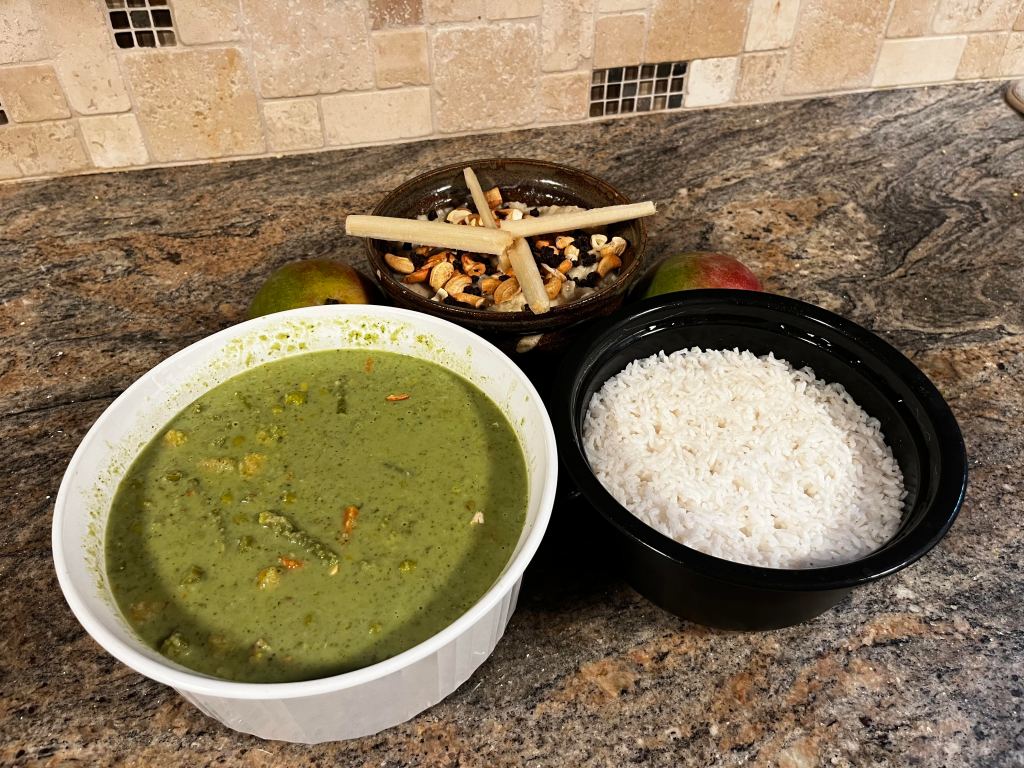
Growing up, this second day was the primary focus of our family’s celebration. Dedicated to the Sun god Surya, it corresponds to Sankranti, a harvest festival celebrated in various forms throughout India. We can think of this as the return of the sun. Therefore, Pongal is a celebration of Surya as he starts his ascent. This is the day of my primary memories of Pongal in my immediate family, my mother and aunt setting up the charcoal stove. On it sat the bronze paane, Pongal boiling away. Pongal is not just the name of the holiday; it is also the name of the dish prepared on this day. The dish pongal is made with milk, rice and moong dal. Just like with her coffee, my aunt was liberal with the sugar. The vessel, called a paane, was made of bronze with a narrow bottom, a wide hip, and a narrow neck. The neck of the vessel was adorned with flowers and the root of the turmeric plant. My Mom would tie chunks of sugarcane to the neck. All these were signs of abundance and the hope for more through the year.
Either my Mom or my Aunt would stir it occasionally to prevent it from catching in the bottom. A half hour or more later, the milk would start to boil. “It is starting to boil over,” they would yell at all of us, our cue to join them in the kitchen. My uncle, dad, brothers and I rushed into the tiny kitchen. As the milk boiled over, we would yell “Pongaloooo, Pongal!” It was a joyous call for the abundance to overflow and let the good times continue. Either my Mom or my Aunt would add almonds, cashews, raisins, and chunks of sugarcane to the Pongal, stir it all in and let it cook some more. They would add saffron to give it that fragrant aroma and a golden color.
The overflowing Pongal pot
Here I (Loam) would like to interject. In the past year, I have been practicing making payasam, a creamy South Asian pudding, made by simmering milk, sugar (traditionally jaggery), and rice, flavored with cardamom, saffron, and garnished with nuts like cashews and raisins. It’s a dish that requires patience and attention, taking more than an hour for the milk to boil down and consistent stirring to keep the bottom of the pot from burning, or “catching” as Srini describes it above. In preparation for this year’s Pongal, at Srini’s suggestion, I adapted the recipe to include dal, which makes it more Pongal than Payasam. In the early stages of boiling, it’s easy to get distracted. I was putting dishes away. I was grinding cardamom. Suddenly I heard the sound of milk boiling over, sizzling on our glass top electric stove. What I thought was a culinary mistake turned out to be the very essence of the holiday Pongal literally means overflowing. Srini told me how his mother and aunt would say “Pongaloooooo pongal” when that happened, the elongation of “ooooo” a sound overflowing to match the boiling milk overflowing. There’s something liberating to me about this practice, embracing the overflowing abundance rather than trying to contain it, rather than preventing a mess. Now, back to Srini:
When it was taken off the stove, everyone was passed their own small cup full of the piping hot Pongal. The milk having thickened considerably, the sugar, nuts, and saffron were just so unctuous. The best parts were getting the sugarcane chunks. They were big enough to gnaw on but small enough to swallow–not something you could do with the bigger cuts of sugarcane.
My Mom and Aunt would make lunch for all of us. We would gather together for lunch at the dining table, something we did every day for dinner. This was a special time and we all sat together for lunch too.
The third day of Pongal is called Mattu Pongal and on this day, cattle are celebrated. They were bathed, their horns decorated, and were fed sweets including pongal, sugar cane, jaggery, and fruits. This day brings up associations to the ancient Celtic ritual of driving cattle through twin Beltane fires for purification and protection. In the same way cattle have long been regarded as sources of wealth and propensity in Hindu culture, these livestock ensured community prosperity in ancient Celtic cultures. The smoke from the fires was though the cleans them from disease and misfortune.
In my family, Mattu Pongal was not celebrated. We went right to what is often considered the fourth day of Pongal, called Kanu Pongal or Kaanum Pongal. The Tamil word kaanum translates as to see or to visit. On the day after Pongal, my mother would visit her brothers and sisters who lived in their ancestral house. At my grandmother’s house, my mother’s siblings and their families would have set up an altar for the Sun God, Surya, to honor the beginning of his northward ascent. One of my aunts laid out a Kolam (also known as Rangoli) to celebrate the Sun God Surya. Entire uncut sugarcanes were placed on either side of the Kolam. This was the only time I remember the Sun god being worshipped.
Decades later, this celebration of the Sun god has remained with me, especially as I began to learn about the solar rhythms inherent in Druidry. As I immersed myself in the path of HinDruidry, I found that weaving in a prayer to Surya was most apt, especially at Beltane. In this prayer he is referred to as “Aadi Deva”, the “Primal Being”
Aadi-Deva Namastubhyam
Prasiida Mama BhaskaranMy Salutations to You O Adideva (the first God)
Please be gracious to me O Bhaskara (the Shining One)
My mother and her sisters would take bright-yellow bowls of turmeric-coated rice up to the highest terrace in the house. Only women were allowed this role. They would then make small balls with the rice and set them up on the parapet walls for the crows to come and eat.
Crows represent our ancestors. On this day, my Mom would visit her family and they would set food out for their ancestors. I have memories of what they did. The honoring of the ancestors was ritualized but not spoken out loud. It took me decades and walking the Druid path to learn about the connection to ancestors from my Hindu side.
Pongal contains within it the seeds of many Druid festivals: Lughnasadh and Alban Elfed in that it is a harvest festival; Beltane in its connection to driving cattle between the fire; Samhain in that it connects us to the ancestors; Alban Arthan and Alban Hefin in that it connects us to the birth and strength of the sun. References to an entire wheel of the year are encoded in this beautiful four-day festival.
What follows is a HinDruid Pongal Ceremony we wrote to honor this festival.
A HinDruid Pongal Ceremony
Here we share a HinDruid ceremony to celebrate Pongal. This ceremony fuses structural elements of Druid ceremony with Hindu elements
Opening
HERALD: By the power of lotus and sun
By the power of the land within and without,
By all that is fair and free
We welcome you to this rite of Pongal
To celebrate our restoration
To celebrate the return of the sun
To celebrate an auspicious harvest
To celebrate the abundance of the gifts bestowed upon us
We have come from East and West, North and South to be here together today. (All join hands)
DRUID 1: Let us join hands and take three breaths…
Together with the Earth beneath us,
Together with the Sky above us,
Together with the Trees and Seas around us.
With the blessings of Earth, Sea, and Sky, may our ceremony begin!
Request for Blessing
DRUID 2:Facing the Sun, recite the opening lines to Surya Ashtakamto welcome the Primeval God
Aadi-Deva Namastubhyam
Prasiida Mama Bhaskaran
My Salutations to You O Adideva (the first God),
Please be gracious to me O Bhaskara (the Shining One)
DRUID 1: Recite the Gayatri Mantra. Gayatri is the manifestation of Saraswati and is often associated with Savitṛ, a solar deity in the Vedas
ॐ भूर्भुवः स्वः तत्सवितुर्वरेण्यं भर्गो देवस्य धीमहि धियो यो नः प्रचोदयात्
Om bhur bhuvah swaha tat savitur varenyam bhargo devasya dhimahi dhiyo yo nah prachodayat
Offering of Peace
DRUID 2: Let us begin by giving peace to the quarters, for without peace, can no work be.
(Moving to salute each direction in turn, crossing the center of the circle, then returning to place in the West)
North: उत्तरे शान्तिः भवतु Uttare shanti bhavatu May there be peace in the North
East: पूर्वे शान्तिः भवतु Poorve shanti bhavatu May there be peace in the East
South: दक्षिणे शान्तिः भवतु Dakshine shanti bhavatu May there be peace in the South
West: पश्चिमे शान्तिः भवतु Paschime shanti bhavatu May there be peace in the West
All: सम्पूर्णलोके शान्तिः भवतु Sarva loke shanti bhavatu May there be peace throughout the whole world
Casting & Consecrating the Circle
DRUID 1: Let all disturbing thoughts be laid aside.
(Casts circle, beginning in the east and moving sunwise.)
DRUID 2: The circle of our horizon – of our lives and lands, of time and of the year, of seasons and of goodness, of rain and rest, of sewing and reaping, of birth and of growing, of dying and of rebirth.
As this circle is cast, the enchantment of the apparent world subsides. We stand together in the eye of the sun, in the perfect balance between day and night, light and dark, here and now, between past and future. The earth below us, the heavens above us, and the circle around is. This is sacred time. This is sacred space.
ALL: We are fully present, here and now.
DRUID 1: Now let us consecrate this circle with Water and Fire
WEST:Begin in the west, circling around with sacred waters, repeating these words
May our circle be purified and blessed with the element of water.
SOUTH: Begin in the south, circling around with camphor or incense, repeating these words
May our circle be purified and blessed with the elements of fire.
DRUID 1: We gather as equals, in our physical form here upon the earth. Each presence is a blessing, and with every breath we take, we breathe light and life into this circle.
Honoring the Directions
Turn and face outward when honoring each direction.
DRUID 2: Let the four directions be saluted, and let the gateways of the Quarters be opened, that power and radiance might enter this circle for the good of all beings.
EAST: With the blessing of Indra, King of the Gods, we call upon the powers of the East.
SOUTH: With the blessing of Yamaraja, the God of Dharma, we call upon the powers of the South.
WEST: With the blessings of Varuna, God of the oceans and rivers, we call upon the powers of the West
NORTH: With the blessings of Kubera, the God of wealth and all nature spirits, we call upon the powers of the North.
The Rite
EAST: I proclaim the festival of Pongal.
WEST: I proclaim the auspicious harvest
SOUTH: I proclaim the return of the sun
NORTH: I proclaim the time of overflowing abundance.
ALL: Pongaloooooo pongal!!!
DRUID 1: Let us now meditate on the restorative properties of rest. Take a moment to do a gentle body scan, starting with your feet and moving up your legs. Notice any tension or holding in each body part. Notice areas of relaxation and slack. Notice sensations and temperature. Continue into your hips, your belly, your chest, down your arms into your hands, and up your neck, into your face, and up through the crown of your head.
See if you can let go of sensations of doing and enter into a state of simply being. Notice your breath. Feel the gentle rhythm of your breath and, with each exhale, consciously let go of tension, allowing the body to become heavier and softer. Notice where you can release further. You are entering into an embodied sense of the month of Margazhi in your own being. Allow your thoughts to drift without engagement. Let them pass like clouds. There is no need to hold on to them. There is no need to control or fix anything. You might imagine your body unwinding, moving from active awareness to a state of profound calm and restoration.
In your inner grove, or your inner puja room, open your eyes. Behold the elements of rest in the space around you. Perhaps something in this space beckons you to rest even deeper. Stay in this state of rest, this embodied Marazhi as long as you like.
Only when you are ready, when you feel as rested as you can possibly feel, will you notice a threshold appearing. It is the threshold of Pongal, inviting you to emerge again into the world of action, renewed and rejuvenated. What is waiting to be harvested on the other side of this threshold? What overflowing abundance do you wish the Surya to bless you with? Know that you only need to cross this threshold when you are ready.
DRUID 2: Let us partake of Pongal. With each bite, may you be blessed with overflowing abundance from Surya.
(Druid 1 passes cups of Pongal to all participants and all partake.)
DRUID 2: May Surya bless you with success and good fortune
May your life be as sweet as sugarcane
May your heart always be full of gratitude for nature’s harvests.
May happiness overflow in your life, like the overflowing Pongal pot
ALL: Pongaloooooo pongal!!!
The Closing
DRUID 2: It is the hour of recall. As the fire dies down, may it be relit in our hearts. May our memories hold what the eye and ear have gained.
May the spirits of the Four Directions be thanked for their blessings.
NORTH: In the name of Kubera, God of wealth and all nature spirits, we thank the powers of the North.
WEST: In the name of Varuna, God of the oceans and rivers, we thank the powers of the West.
SOUTH: In the name of Yamaraja, the God of Dharma, we thank the powers of the South.
EAST: In the name of Indira, King of the Gods, we thank the powers of the east.
ALL: May the harmony of the land be complete.
All turn to face center again.
ALL: May the harmony of the land be complete.
DRUID 1: Moving counter-sunwise, un-cast the circle. Return to East and say:
May the blessings of the Shining Ones be always with us. I declare this ceremony of Pongal closed in the apparent world. May the abundant harvest of its blessings wax like the sun within our beings.
 HinDruidry
Leave a comment